Reflections on Parenting: Again!

Ang-gen. That’s how my little one pronounces “again”. Ang-gen.

At times, we will be doing something he enjoys, perhaps singing a song, or blowing raspberries on his belly and through his peals of infectious laughter, he will ask to do it again.

But sometimes he doesn’t ask. He should, because he needs it. I need to tell him things again, perhaps he needs to physically go over things again. He needs the repetition in order for the lesson to sink in. He hasn’t learnt yet.

In the eyes of God, we are just like my little one. When He gives us good things, it must delight Him to hear us say “again, again!”, expressing our acknowledgement of and appreciation for His goodness and kindness to us. This joy must be shared the way I share in my child’s joy. Our prayers of praise and thanksgiving must be music to God’s ears, not unlike the way my child’s giggles elicit an easy smile from me.

And sometimes, we are the struggling child. Sometimes we find ourselves constantly falling into sin. Sometimes, it is the same habitual sin that we want so much to get away from but that we keep finding ourselves tripping up on, again, and again, and again.

But I want you to remember that you are not the first person to commit sins that you know are wrong. St Paul writes in Romans, “I do not understand my own actions. For I do not do what I want, but I do the very thing I hate.” (7:15) St Paul. You’re in good company. But he knows, as you probably do, that we can’t stay unrepentant in our sin.
The encouraging thing is that our God is merciful. Be consoled in the knowledge that just like parents will repeat instructions and experiences until their child learns, God is perfectly patient in teaching us how to overcome our weaknesses. As St Peter tells us, “The Lord is not slow about his promise as some count slowness, but is forbearing toward you, not wishing that any should perish, but that all should reach repentance.” (2 Peter 3:9). As long as we are earnest in our journey of faith, honest with God and ourselves about our motivations, and our repentance is sincere, God is always ready to forgive, and help us to try, ang-gen.

Is there anything you have received lately that causes you to praise God? Have you overcome any habitual sins? What helped you?

Until next time, let’s pray for each other. And remember, we can do Mom things through Christ who strengthens us!


The Patron Saint of Pumpkin Spice

This post is a departure from the regular parent-influenced content, but I just can’t help it this time of year. If you’re anything like me, pumpkin spice season is one of your favourites. There’s just something about cosying up under a blanket and admiring the fall colours while sipping on a steamy mug of some comforting PSL. But did you know that these spices come highly recommended by a Saint, and a doctor of the Church?

Saint Hildegard von Bingen lived in the Roman empire in the 10th Century, whose feast day happens to fall on this very day (September 17th)! She was a mystic and a jack of many trades, including medicinal recipes, and she wrote about this much-beloved spice mix which I might be sipping on as I write this post – I shall neither confirm nor deny.

Although she was only relatively recently canonised (2012), she was known to the crunchy Catholic community for a long time – possibly before crunchy became a thing! And while she is widely known for her health recommendations, I’d like to draw your attention to her signposting joy!

She once wrote, “All of creation is a symphony of joy and jubilation.” She also calls Christians to offer their lives and serve God joyfully, saying “Be not lax in celebrating. Be not lazy in the festive service of God. Be ablaze with enthusiasm. Let us be an alive, burning offering before the altar of God.”

It should come as no surprise then, that the mix of spices we now use in our PSLs were recommended for joy! Here is what she wrote about this delicious blend:

Take some nutmeg and an equal weight of cinnamon and a bit of cloves, and pulverize them. Then make small cakes with this and fine whole wheat flour and water. Eat them often. It will calm all bitterness of the heart and mind, open your heart and impaired senses, and make your mind cheerful. It purifies your senses and diminishes all harmful humors in you. It gives good liquid to your blood, and makes you strong.

From Physica, St Hildegard von Bingen, circa 1151-1158

The recipe has been adapted by many people over the centuries in what we now know as cookies of joy. I invite you to check out this cookie recipe from Andrea (The Kitchen Lioness), inspired by St Hildegard von Bingen!  They are perfect to wash down with a hot pumpkin spiced drink!

Had you heard of St Hildegard? Which of her many talents are you drawn to? Have you had cookies of joy? What other recipes do you use this spice blend in? Are you a PSL affictionado like me? What else do you love about this season? Let’s share our joy and our love of pumpkin spice in the comments!

Until next time, let’s pray for each other. And remember, we can do Mom things through Christ who strengthens us!

Meat Free Friday Recipe: Cheesy Broccoli Balls

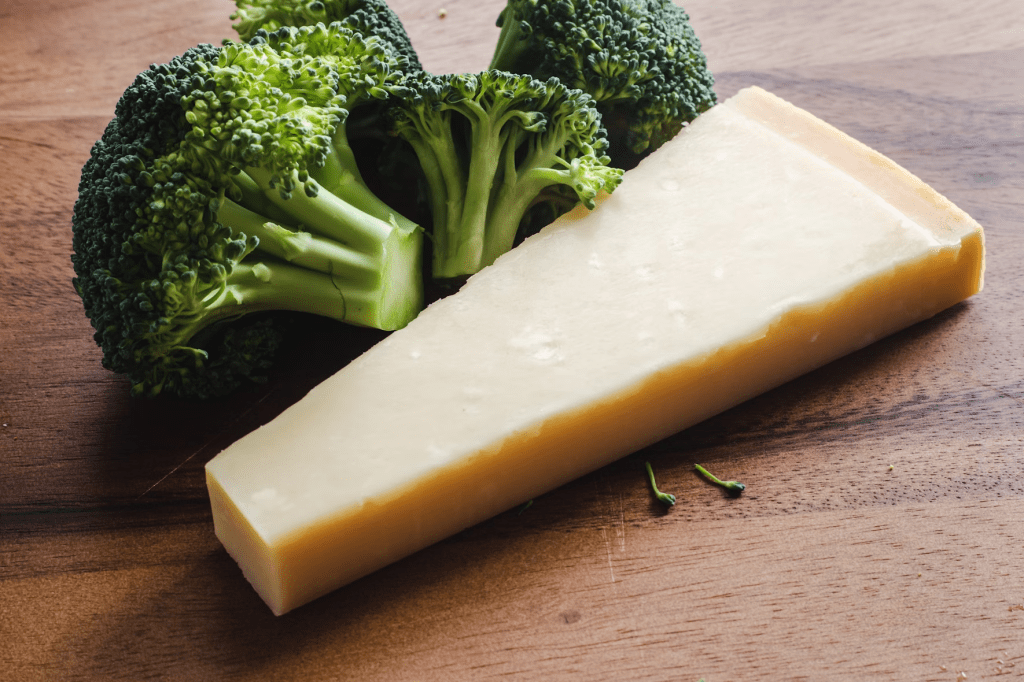
It is undeniable that broccoli and cheddar is a classic pairing. I love to sprinkle broccoli with shredded cheddar and broil until you get those crispy brown bits as a quick and tasty snack, but this dish has a little more protein so you can serve it as a snacky kind of meal – perfect for littles like mine who won’t show much interest in a meal but if I say it’s a snack, we’re in business! I like to pair this with a cheesy mashed potato or a cheesy pasta to really boost those cheese flavours. When it’s not a Friday, I’ll add a little bit of finely chopped bacon into the mix, but we are mindful to leave out that balcony goodness on a Friday – sacrificing meat to remember Jesus’ sacrifice is kind of the whole point of meat-free Fridays, guys.

Oh, bee tee dubs, this recipe is a wink and a nod to fellow air-fryer-cultists. For non air-fry heads, you could probably do them in a conventional oven as well, but times may vary (I believe you could use a convection oven to the same effect as an air fryer)

Serves 4 (or 2 very hungry people, or 6-8 if you’re serving it on the side)

Ingredients:

  • 4 cups broccoli florets (fresh or frozen)
  • 2 cups shredded cheddar cheese
  • ½ cup grated parmesan cheese (I prefer pecorino, but I know parmesan is more common and easier to find)
  • 2 eggs, beaten
  • 2 tablespoons cream
  • 1 tablespoon melted butter
    ½ cup breadcrumbs
  • 2 teaspoons minced garlic
  • ½ teaspoon thyme leaves
  • ¼ teaspoon ground nutmeg
  • Salt and pepper
  • Avocado oil spray (or any other sprayable oil)

Directions:

  1. Preheat air-fryer to 400°F 200°C)
  2. Steam broccoli florets until tender, about 5 minutes. I like mine to retain a bit of crunch so I tend to go a little under, but steam for longer if you want them softer. Drain and allow to cool until you can touch them comfortably. Roughly chop florets and transfer to a large bowl.
  3. Add all the cheese, eggs, cream, melted (and cool!) butter, breadcrumbs, minced garlic, thyme, nutmeg and salt and pepper to the bowl and mix until ingredients are evenly combined.
  4. Roll the mixture into bite-sized balls and line them up on a tray lined with baking paper.
  5. Spray the balls lightly with cooking oil spray and pop into your air fryer basket.
  6. Air fry for 10-15 minutes, or until the balls are golden brown.

Until next time, let’s pray for each other. And remember, we can do Mom things through Christ who strengthens us!

To Such As These: Priest, Prophet, and King

I write these “To Such As These” posts every now and then to explain some aspect of the Catholic faith to children. I try to use simple language so you can just read it directly to them instead of having to put it into your own words! The category name is inspired by Jesus’ words in Matthew 19:14: “Let the little children come to me, and do not stop them; for it is to such as these that the kingdom of heaven belongs.”

Today, we will be looking at anointing, and what our baptismal anointing means.

If you have any topics you’d like me to cover in this category, pop them in the comments and I’ll add them to the list!


This Sunday, in the Gospel reading, we will hear Jesus ask who people think He is. The disciples tell him what people at the time thought; that He was a new prophet, or perhaps one of the old prophets like Elisha or Elijah, who returned to prepare the way for the Messiah. When Jesus asks them who they think He is, Peter speaks up and says that Jesus is the Christ.

But what does it mean that He is the Christ?

Christ is a name with a meaning, like any last name, which can signify what someone does, how they look, or where they are from. Christ comes from the Greek word Christos (Χριστός), which means anointed one. Among the Israelites, who were the people through which God brought the Messiah, who would save the whole world, priests, prophets and kings were anointed with oil. This was a sign that they had been chosen by God and were filled with His Spirit.

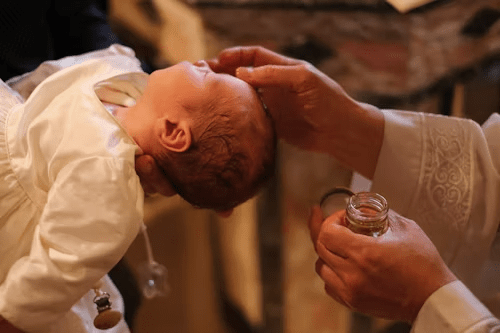
Interestingly, When we are baptised, we become Christians, that is to say that we become little Christs. At baptism, we are anointed with oil, we receive the Holy Spirit, and we gain an identity in Jesus Christ. Just like the priests, prophets, and kings of the Old Testament, we are also chosen by God to become part of His family! During this anointing, the priest says a prayer with the words, “…as Christ was anointed Priest, Prophet, and King, so may you live always as a member of his body…” That means that every person who is baptised is anointed a priest, a prophet, and a king! Including you!

Priest, prophet, and king are more than just cool titles. Let’s take a deeper look and try to understand what we should do in each of these roles. To do this, let’s look at what it meant for an Israelite to be a priest, prophet, or king.

A priest in the Old Testament was someone who made sacrifices to worship God, and connect God to the people. Our consecrated priests offer up Christ’s sacrifice on the cross each time they say Mass. But because you have been baptised, you are a priest who is part of the crowd. That means that you have a role in offering up sacrifices to worship God too. You can give your heart and your life to God together with the sacrifice of Jesus. You can connect God to the people around you by asking Him to use your heart and life to save the people you care about.

A prophet in the Old Testament was a person who told others about God and encouraged them to live as God wants them to live. You can do this by setting an example in your own life and living in a way that honours God. You can also speak personally to people you love to correct them. Many artists, youtubers, bloggers and podcasters also live their prophetic role through the media and content they produce. Maybe you have a special talent that you could use to teach others about God or help them to live holy lives.

A king is not just a person who rules over people. In the Old Testament, a king’s job was to lead people to God. You too, in the things that you do in your everyday life, can lead others to God. You can help people to make good choices, by making good choices yourself, and also by giving words of encouragement or advice. You can remind other people to pray, or even invite them to pray with you!

Through our lives, people should be able to look at us and recognise that we are anointed priest, prophet and king. Who are we? We are little Christs!


Talking points

  • Let’s think of some people to pray for this week when we go to Mass.
  • What talents do you have that you could use to teach others about God? Let’s write a poem/make an artwork/sing a song that sends a message about God.
  • Have you helped someone to make a good choice? What did you do?

Let me know if you have any other thoughts on this in the comments below. How have you been a priest, prophet, or king to the people in your life recently? I find this baptismal anointing to be such a powerful call and a reminder of our work as Christians and would love to keep the discussion going!

Until next time, let’s pray for each other. And remember, we can do Mom things through Christ who strengthens us!
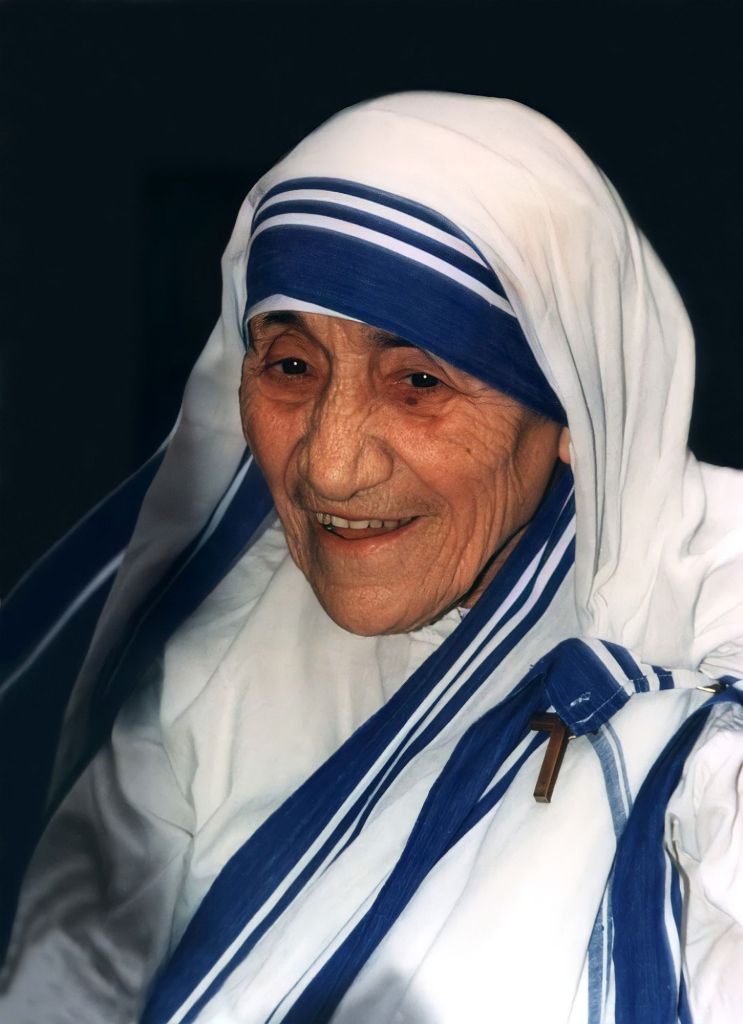
Saint of the Month: Saint Teresa of Calcutta

St Teresa of Calcutta

Feast Day: September 5
Patron Saint of World Youth Day, Missionaries of Charity, Archdiocese of Calcutta (co-patron)

If you grew up in the late 20th Century (man alive, does that make me feel old!), you will be familiar with her work in providing hospice to the homeless and dying in Calcutta. Commonly referred to as simple Mother Teresa, she was a household name. Many regarded her as an inspiration and even the secular media would often call her a living saint. Less than 20 years after her death, she became a canonised saint.

She was an agent of change, as her ministry meant that people in Calcutta were no longer left to die on the streets. Though there were significant barriers to the kind of care they could provide, they were at least able to give a home and some comfort to the dying. That in itself was a far cry from the exclusion and even derision that they would have faced as they were left in their misery.

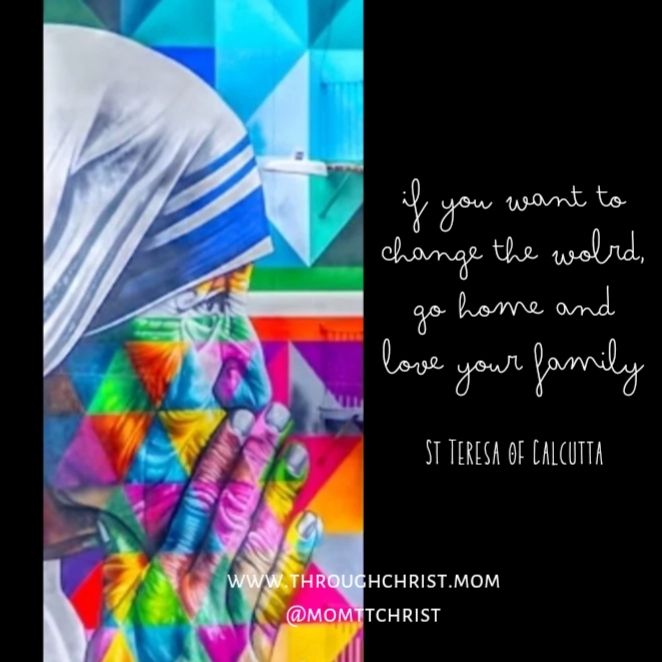
She has a powerful quote for anyone who wants to change the world today.

If you want to change the world, go home and love your family.

She points us to loving those around us. And love is so much more than a sentiment. Love requires concrete action, desiring the good of the other person, taking steps to make that happen. We should first extend our love to those closest to us, and those who we spend time with.

Yes, Saint Teresa of Calcutta tells us that change starts at home. In fact, change starts in our very hearts. 

I really like the French word for heart: coeur. It speaks of the core. In the most inner part of you, your very essence. Our heart holds our disposition and our attitude.

Maybe this is where the change needs to begin in your life. Jesus is the answer to this change. First love Him. Then allow His love to fill you, show you how to truly love, and then let this love touch those closest to you. If we can radiate our love to our families, then just maybe, that love will spread to those around them and change the world.

Until next time, let’s pray for each other. And remember, we can do Mom things through Christ who strengthens us!
September Devotion: Our Lady of Sorrows

The Church gives us Mary as our September devotion. Oh, how we love our Blessed Mother! But particularly, this month we look at Mary in her sorrows. I can’t help but think about Our Lady of Sorrows framed by motherhood.

Have you ever witnessed your child take a particularly nasty spill? Or have you heard them cry but you are unable to get to them? What about when they are sick and in pain but you have no way to take the pain away? I know I get a visceral reaction – I feel it in my body when my child gets hurt. I feel like throwing up when I hear my child crying and I cannot comfort him. My chest physically aches with helplessness as my child suffers in sickness. I want you to consider what these experiences are like for you. Okay. Hold that thought for a minute.

Jesus, of all the times in history to come into, of all the places, chose the Roman empire. This was a society where torture and death was an artform, and the Romans gave him an extreme measure. Scourging. Humiliation. Taunting. Suffering. Death. And He knew it was all coming! That’s why He prayed so fervently for it to be taken away from Him if the Father willed it. On the cross, Jesus felt the weight of all of human sin. Under the weight of sin, He experienced how it feels to be turned away from the Father. So He knows exactly what it is to experience physical, mental, and spiritual in the most extreme form.

Now that thought that you had, how you share in your child’s sorrows, bring that back. Maternal co-suffering is a thing. I am sure you have felt it, deep in your heart. Imagine how our Blessed Mother would have felt as she shared the suffering of her Son in her maternal way.

Earlier this month, we learned what Mother Mary does when something troubling or sad happens. The Gospel tells us that she “kept all these things” (Lk 2:19). She didn’t try to forget them, she carried them with her. And at the moment of greatest suffering and sorrow, she stood at the foot of the cross, with Jesus.

It would be foolish to pretend that life is all butterflies and roses. We all have sufferings and sorrows. Let us not bury ourselves in pleasure or busyness or whatever our mechanism of choice is. Creating distance between us and our sorrows is not the best way to bear them. No, the best way to bear our sorrows and sufferings is to imitate the way our Lady bore hers. She carried them in her heart to the end, and with these sorrows, she stayed with Jesus.

At the cross, where Christ gives His mother to us, we can stand with her. She knows what it’s like. And more than that, she loves her children and wants to help them. Let us ask her to carry our sorrows with us, helping us offer them back up to her Son. We may not understand how in this life, and maybe not in the next, but we must always remember that God can take our tears and turn them to joy.

Our Lady of Sorrows, pray for us.

What does Our Lady of Sorrows teach you? Are you living anything particularly difficult at the moment? Perhaps you want to make a prayer request.

Until next time, let’s pray for each other. And remember, we can do Mom things through Christ who strengthens us!

September Prayers

Another month is nigh! You know what that means: prayer request time!

I get down to business with the hands-on work for my job quite early this month, so please pray for that! I chose my career path after a lot of prayer, so I am convinced this is how God is calling me to carry out His work. I will be faithful in doing what He has called me to do as I begin working with these beloved children of God.

I also will ask, as I usually do, for us to keep in our prayers the prayer intention of Pope Francis for the month of September, which is:

FOR THE CRY OF THE EARTH

We pray that each one of us will hear and take to heart the cry of the Earth and of victims of natural disasters and climactic change, and that all will undertake to personally care for the world in which we live.

How can I pray for you? Is there anything coming up that is weighing on your mind? Is there something for you to be thankful for? No prayer is too big or too small! Drop me a note in the comments (and if it’s just a “personal intention”, that works too).

Until next time, let’s pray for each other. And remember, we can do Mom things through Christ who strengthens us!
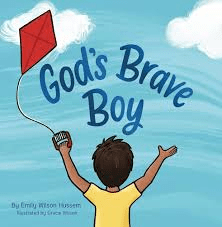
Reading Nook: God’s Brave Boy

Author: Emily Wilson Hussem
Illustrator: Gracie Wilson
ISBN-10: 057888710X
ISBN-13: 978-0578887104

This is a book in a series of two by the inspiring Emily Wilson Hussem, the other being titled God’s Glorious Girl. I will leave a caveat: I have had a look through God’s Glorious Girl, and it seems fairly similar to God’s Brave Boy, but we don’t actually own a copy due to only having a boy (thus far, please God we would love more kids!).

This book was written for Christian children. Wilson Hussem’s intention was to write a book that introduced our youngest learners to their identity in Jesus, and His presence in their life. The story reads with a rhyme, which makes it easier for children to remember words (as well as learn them), hopefully making it easier for them to take the message in. It is written in simple language without being too dumbed down. There are some words and concepts to talk through, but I think this is actually a good thing, as you may find inspiration for good discussions to have with your children! The illustrations are also fairly simple, though not so simple that they don’t add more meaning to the text. The images are also racially diverse and inclusive of people with disabilities. I think this is important as it can help children to see themselves in the book and understand that they too have these gifts and calling. 

The book is fairly small so will easily fit into most diaper bags, handbags, or Mass bags. The pages are on the thicker end for a board book, so it really does live up to its age recommendation of 0-6 – just watch out for your teethers if you want to keep it in good condition!

My favourite part of the book has to be the blank space on the very first page. Every time you read it, you start by saying: My name is [child’s name], and I am God’s brave boy! This is a wonderful anchor in their identity as a child of God!

My little one particularly liked the part about doing what is right. The book instigated a discussion on sharing, as the image showed two children sharing toys. Soon after, he started sharing his toys with our cat – it was a well-intentioned act, but probably under-appreciated.

I have to admit, I also love the part where it talks about standing up for people and doing what is right, because these are actions good men take. I have recently started talking to my son about how he has to be strong, but that he must learn to use his strength to protect those who are not as strong, echoing one of the messages we found in the pages of this book!

We love this book. My only complaint is that the God’s Brave Boy colouring book isn’t available (Emily Wilson Hussem, we’re looking at you).

God’s Brave Boy is a fantastic starter book for young Christian boys, and features in our regular rotation. It would make a great gift for a baby shower, baptism, dedication, and those early Easters, Christmases, and birthdays.

Have you read this book? Perhaps you have God’s Glorious Girl. Do you like it? What has your child picked up from reading it? I would love to hear your thoughts in the comments! I’m also happy to answer any questions to the best of my ability!

Until next time, let’s pray for each other. And remember, we can do Mom things through Christ who strengthens us!
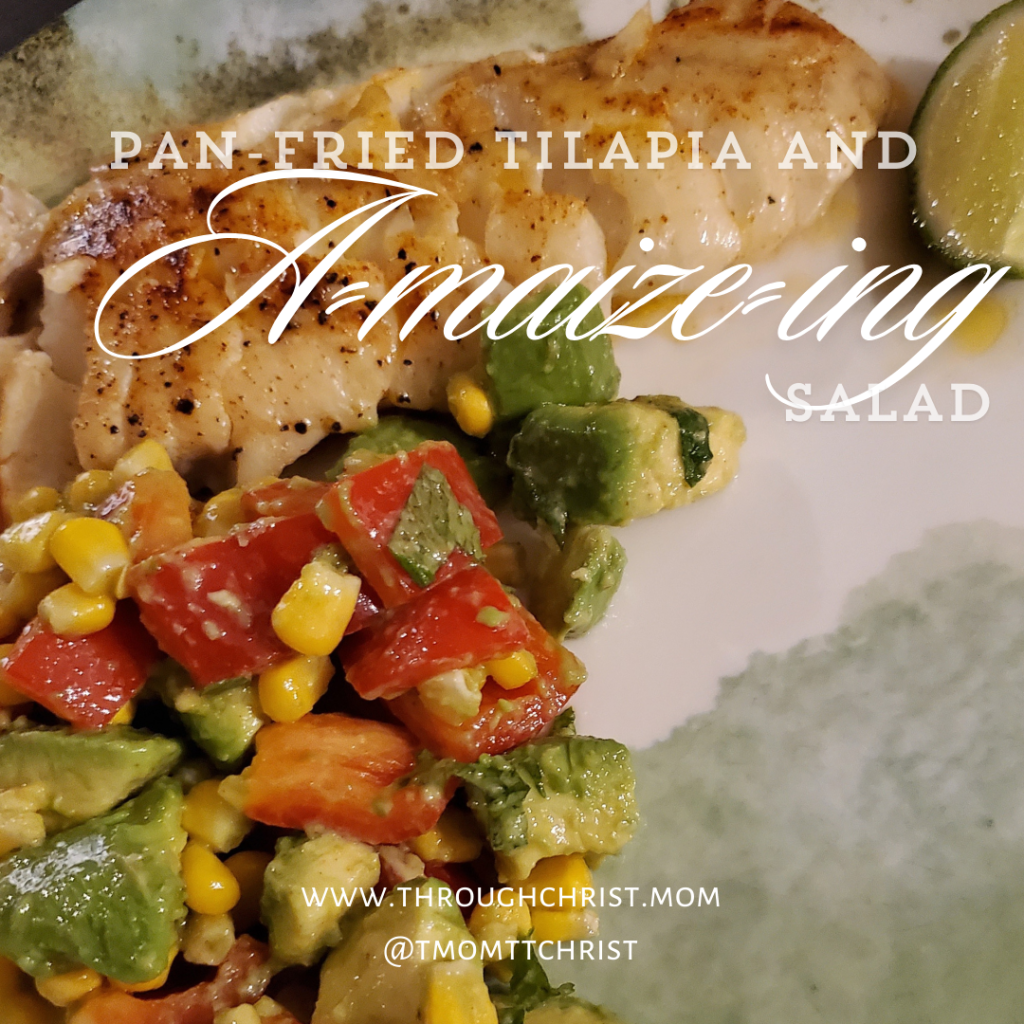
Meat Free Friday: Pan Fried Tilapia with A-maize-ing Salad

It’s corn season out here, so today I’m throwing in a little side dish that checks the boxes for carbs and veg, and is wonderfully sweet, crisp, fatty (the good kind, whatever that means), and fresh to round out the meal! This recipe feeds four (or two very hungry people, but if it’s a Friday, it might be more appropriate to exercise some self-control).

Equipment:

  • Medium frying pan or skillet
  • Large bowl

For the fish:

Ingredients:

  • 4 tilapia filets
  • ½ teaspoon salt
  • ½ teaspoon ground black pepper
  • ½ teaspoon onion powder
  • ½  teaspoon garlic powder
  • ½ teaspoon paprika
  • olive oil for frying
  • 4 lime wedges (or cheeks, or however you like to slice them) to serve

Method:

  1. 20-30 minutes before cooking, remove fish from fridge to bring them to room temperatur
  2. Pat fish filets dry with paper towels and rub with salt, pepper, and spices
  3. Heat up the oil on a high heat, and once the oil is hot, turn the setting down to medium
  4. Add two filets at a time to the pan so as not to cool the oil too much and cook for 3-4 minutes on each side, repeat as necessary
  5. Serve with a wedge of lime

For the salad:

  • 1 diced red bell pepper (or red capsicum if you’re from my homeland)
  • 2 avocados, peeled and diced
  • kernels from one cob of corn, steamed and cut from cob (canned corn kernels or rehydrated frozen corn can be used as substitute)
  • ⅓ cup of mint, roughly chopped
  • Juice of half a lime
  • Salt and pepper to taste

Method:

  1. Grab your large bowl and gently all the veggies, herbs, and dressing elements together.
  2. Serve right alongside the fish.
  3. There is no step 3! That’s it!

Have you made anything similar? Got any suggestions? Questions? Let me know if you tried the dish and what you (and your families) thought in the comments!

Until next time, let’s pray for each other. And remember, we can do Mom things through Christ who strengthens us!

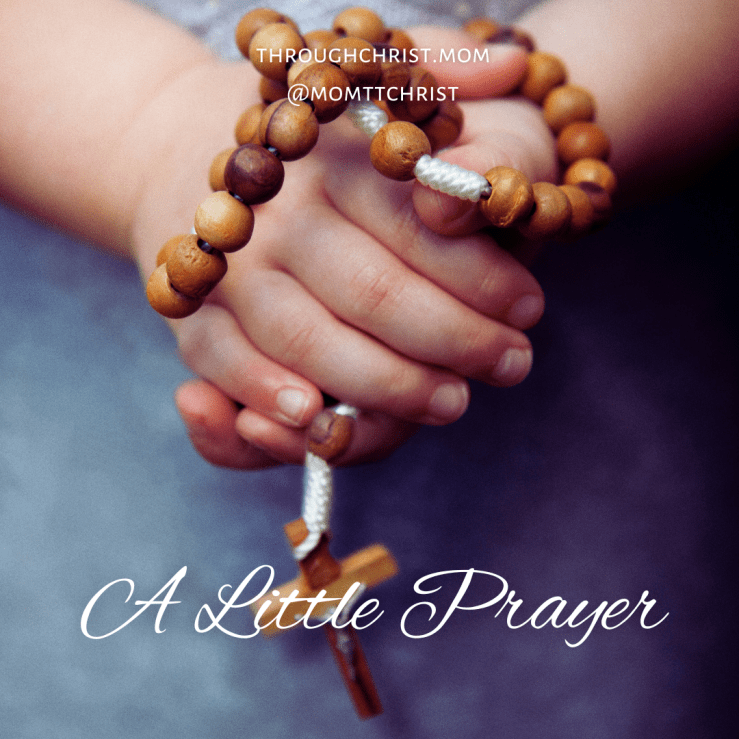
A Little Prayer: Lectio Divina

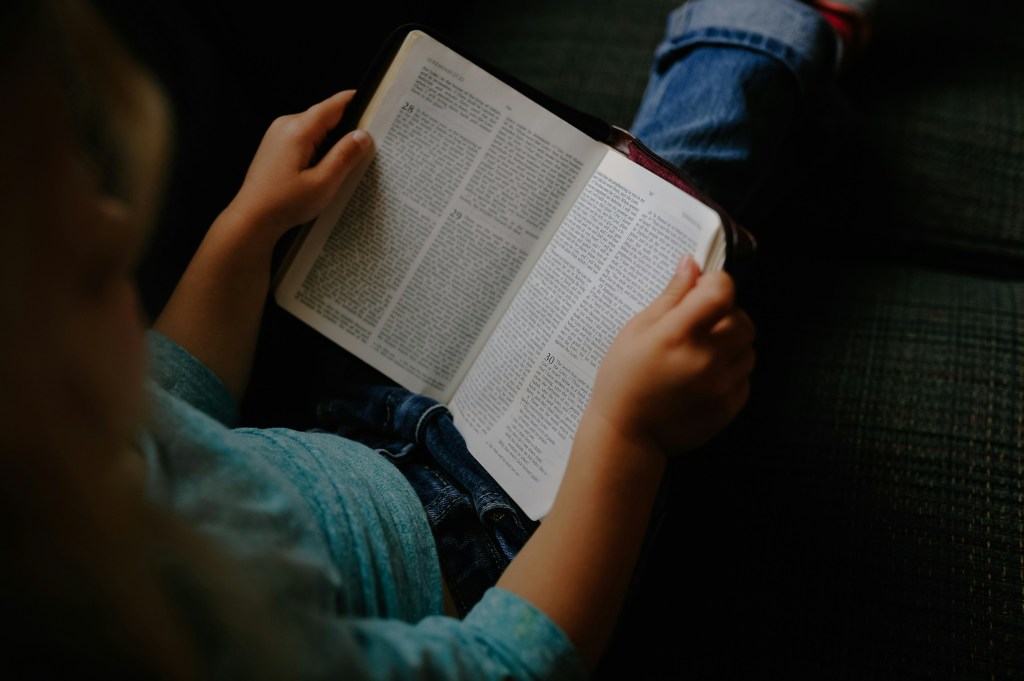
I am so excited to write about this form of prayer today! It is one of my favourite ways to pray the Bible (I love praying the Bible in every way I learn, haha). It is called Lectio Divina.

What is Lectio Divina?

Lectio Divina is an ancient form of prayer, where you converse with God through the reading of a passage in the Bible. It can be done alone or together with other people (like your family!). It is a beautiful time of stillness, but may not be appropriate for wriggly littles who are not great verbally yet.

How is it prayed?

There is a sequence to praying a Lectio Divina.

  1. The first step to any Lectio Divina is to choose a reading. I find that if you want to read from the New Testament, the Gospels tend to work best, and if you’re looking for some Old Testament readings, look to the prophetic and poetic (think Psalms, Wisdom, Proverbs, and of course the various prophets). Don’t go for anything too long, as you’ll need to do several readings, and the point is to focus on one specific and personal message. If you have no idea where to begin, it can be a good idea to look at today’s readings for the daily Mass.
  2. Now that you have selected a passage, it is time to physically, mentally, and spiritually ready yourself to become intimate with the Lord. Do what you need to do to bring your focus to God’s Word. Perhaps you need to put on soft music, or maybe you need to ensure silence by turning off devices and closing doors. Maybe lighting a candle or closing your eyes can help you to settle.

    Optional: I like to say a short prayer here. You could pray for the Holy Spirit to guide you in this reading and to soften your hearts to hear His word for you.
  3. Once you have reached a comfortable stage of quietness and stillness, you can begin to read the passage. I recommend having one person read out loud, especially if you are in a group since there are three readings, you can assign a different person to read each time. Let the whole passage wash over you as you read it. Listen openly for a salient word or phrase. Trust that the Holy Spirit is pulling your attention to this tiny excerpt – God has something to say to you here!
  1. When you have found a word or phrase that stands out to you (sometimes you may not find it in the first reading, but don’t worry), read the passage once more. As you read, let that particular word or phrase speak to your heart. After this reading, take some time to silently reflect on God’s message for you in the word or phrase that you find yourself focusing on. Try to understand what God is saying to you.

    Sometimes the Word of God acts as a window, helping us to see something, a call to action, a mission, a promise, consolation, or encouragement. Sometimes it is a mirror, with convicting words or subtle remarks that help us to look at ourselves. Which of these is it today?

    Remember too, that the Lord is always with you and it is not out of the ordinary for Him to speak directly into your life and the things you have going on. Be open to His word for you, even if it is not what you want to hear. Trust in Him!

    Optional: If you are praying in a group, you may take a few moments to allow anyone who would like to share God’s word for them with the rest of the group.
  1. Read the passage a third time and then spend some more time in silence responding to God’s word. Thank Him for His word, but above all, be sincere in your response! God is not afraid of your fear, or your sadness, anger, resistance, or any other reaction you might feel like hiding from God… He will listen and continue to love you.
  2. Read the passage one more time and let go of the word or phrase that you have been meditating on, remembering to hold on to the message. Still your thoughts and rest in God’s love.

    Optional: After this time of silence, I like to close with a short prayer, thanking God for His word and asking the Holy Spirit to help us be faithful as we bring His word for us to others, through our lives, and then make a sign of the cross.

And that’s it! My only caveat is that in the classic form, it is a long and involved prayer. It might be wise to keep it for mid-teens and up (it wasn’t until my early 20s that I was introduced to this form of prayer myself). I wouldn’t recommend it for youngsters with short attention spans, but you know your kids better than I do.

If you do want to try it with younger ones, maybe you could modify it and have them simply listen for a word or phrase that stands out after one reading and talk about why it might stand out to them. This form of prayer can be a good way to get them used to listening for God’s word in the Bible.

Have you ever prayed a lectio divina? How did you find it? What did you like about it? Please do leave a comment!

Until next time, let’s pray for each other. And remember, we can do Mom things through Christ who strengthens us!