A little prayer: The Jesus prayer

Today’s little prayer is a simple but beautiful one. It is often prayed by our brothers and sisters in the Orthodox Church, but some Catholics are also familiar with this prayer (and definitely a lot of Eastern Catholics!). It is short so it is easy to remember, but even in its brevity, it glorifies Jesus’ holy name and magnifies Him as the Son of God, our Lord, and the Christ, and humbles us as sinners in need of His mercy.

Lord Jesus Christ, Son of God, have mercy on me a sinner.

That’s it!
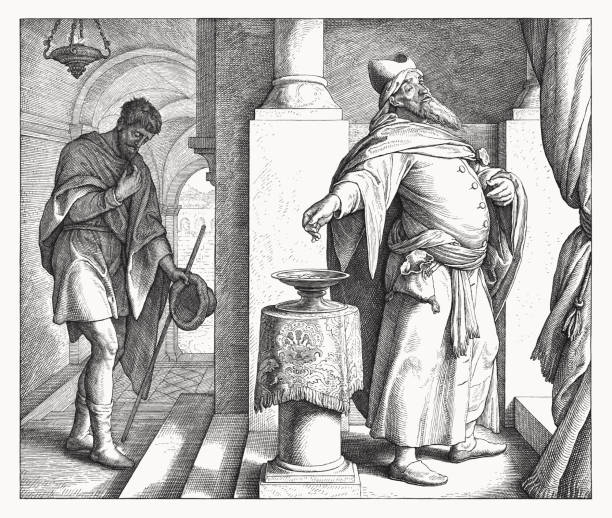
The prayer is biblically sound, as the scriptures reveal Jesus to be our Lord, the Son of God, and the anointed one, or the Christ. The last part of this prayer harken to the words of the tax collector in the parable Jesus tells in the Gospel of Luke, 18:9-14. Unlike the proud pharisee who relies on his own merits before God and boasts about all he has done to win God’s favour, the tax collector is acutely aware of his sinfulness and he humble begs for God’s mercy. The difference in posture towards God is one we must be careful to check in our own hearts, and this prayer is a simple way to get our heart’s dispositions in order.

This prayer can be used in different ways. One way to use it is to pray it repeatedly and meditate on the words. Another powerful use of the prayer is to invoke the mercy of God when we are tempted to sin. -call out to the Lord in those times and allow Him to mercifully save you from the temptation!

Of course, those paragraphs you have just read may go well over the heads of some of our younger ones, but that’s mostly fluff. The point is, this is a beautiful prayer with deep historical and Biblical roots. It may seem quite solemn, but I think solemnity is sometimes called for in life, and children don’t need to be sheltered from it. What I like about this prayer as a parent, is that it is easy to teach little ones because it is so short, but it remains a solid foundational prayer that can easily become a touchstone for them throughout their spiritual journey.

For the littles, I would suggest breaking the prayer down into four parts as follows:

  1. Lord Jesus Christ
  2. Son of God 
  3. Have mercy on me
  4. A sinner

Each of these lines announces something different and important within the prayer. The first line Invokes Jesus and His God-appointed lordship, the second acknowledges His divinity and our acceptance into God’s family, the third names our request and the last line identifies our place before God. Most of these lines are also made up of familiar wordings that can be found in other prayers, which can make it easier to remember.

Have you heard of the Jesus prayer before? What do you think about it? Is this a prayer you would teach your child? Why or why not? How would you teach it to your little ones? Let me know your thoughts in the comments.

Until next time, let’s pray for each other. And remember, we can do Mom things through Christ who strengthens us!

To Such as These: Signs and Symbols

I write these “To Such As These” posts every now and then to explain some aspect of the Catholic faith to children. I try to use simple language so you can just read it directly to them instead of having to put it into your own words! The category name is inspired by Jesus’ words in Matthew 19:14: “Let the little children come to me, and do not stop them; for it is to such as these that the kingdom of heaven belongs.”

Today, we will be looking at signs and symbols.

If you have any topics you’d like me to cover in this category, pop them in the comments and I’ll add them to the list!


Have you ever gone to church and looked at all the statues and paintings and carvings and stained glass windows all around? Our churches would be pretty boring without them all, but they play a more important role than just decoration. They are signs and symbols for us.

What are signs and symbols?

People use signs and symbols as a way to communicate. They are a kind of shortcut way to convey an idea that might need a lot of words to express, but that can be summarised in an image or represented by something else.

Signs are there to show the way to something bigger than themselves. For example, if you are out shopping and you need to use a washroom, you look for the signs that lead the way to the toilet. Or maybe you have seen the signs on the roads that show you where to take an exit if you want to get to a certain town. Perhaps your bedroom has a sign on the door with your name on it, telling everyone who sees the sign that behind the door is your space.

The Gospel of John talks about signs, too. What we might call miracles, John’s Gospel labels “signs”. That is because miracles performed by Jesus act as signs that show us that Jesus is God.

There are lots of symbols used in the Church as well. Symbols are similar to signs, but instead of showing the way to something, they represent something, standing in its place when the actual thing cannot be there.


What signs or symbols are there at church?

Tgere are many signs and symbols you can find in a church. Next time you’re at church have a look around and notice any signs or symbols near you!

In some churches, you might see images of a dove, which would represent the Holy Spirit. Some churches have images of lambs, which represent Jesus, who we call the Lamb of God, as John the Baptist identified at Jesus’ baptism. Sometimes people who are not God are represented by symbols too! For instance St John the Evangelist, is represented by an eagle – you might see it near where the Word of God is proclaimed! You’ll sometimes see statues of saints holding little symbols to represent what they are known for. For instance, St Peter is often shown holding keys, representing that Jesus gave him the keys to Heaven and Earth. St Patrick holds his bishop’s staff and a three-leaf clover to show that he was a bishop who taught people about the trinity. St Francis of Assisi is often portrayed with animals to represent his love of nature – some stories even tell of his preaching to birds!

Some signs and symbols are meant to be experienced in other ways. Holy water is a symbol of our baptism and welcome into God’s family. Candles represent the light of Christ. The smoke from incense represents our prayers going up to heaven.

The most important sign and symbol you will see in our churches is the crucifix, or the cross. They usually are front and centre in our churches and very difficult to miss – that’s just how important this symbol is! The cross sends a message about how much God loved us – as the Gospel of St John tells us, He loved us so much that His only Son Jesus came and gave up His life for each one of us, so that everyone who believes in Him will have eternal life!

Not as good as the real thing

Statues, paintings, stained glass windows, and other artworks in our churches are signs and symbols, too. They can help us to picture our friends in Heaven, and can inspire us to get a better picture of what Jesus’ life (and death) might have been like. When we see a statue of the Sacred Heart of Jesus or a painting of Divine Mercy, we know that this is just a statue or painting and not actually Jesus, but they can help us to feel closer to Him. It’s just like if your parents carry a photo of you in their wallet or on the background of their phone. They know they’re not carrying you and that they will still have to pick you up from school or dance or soccer or music lessons or whatever you might be doing – but while they’re waiting to come and get you, they can look at your picture and it will most likely bring a smile to their face and warm their heart.


Talking Points

  • What signs or symbols do you know from your everyday life?
  • What signs or symbols have you seen in church?
    What do you think they might mean? Let’s find out if you’re right!
  • If you got canonised 200 years from now, what would you want your symbol to be? What would it stand for?

Did you or your children learn about any new symbols or signs through your discussion? What’s your favourite sign or symbol in our Faith? I’d love to continue this conversation in the comments with you!

Until next time, let’s pray for each other. And remember, we can do Mom things through Christ who strengthens us!

To Such as These: The Kingdom of Heaven

I write these “To Such As These” posts every now and then to explain some aspect of the Catholic faith to children. I try to use simple language so you can just read it directly to them instead of having to put it into your own words! The category name is inspired by Jesus’ words in Matthew 19:14: “Let the little children come to me, and do not stop them; for it is to such as these that the kingdom of heaven belongs.”

Today, quite fittingly, we will be looking at the Kingdom of Heaven.

If you have any topics you’d like me to cover in this category, pop them in the comments and I’ll add them to the list!


This Sunday at Mass, we’ll be reading about the Kingdom of Heaven.

In this Sunday’s Gospel reading, Jesus talks about the kingdom of heaven to help people understand what it’s about. We hear about the kingdom of heaven at other times, too, like when Jesus says “But strive first for the kingdom of God and his righteousness, and all these things will be given to you as well” (Matthew 6:33). Every time we pray the Our Father, we say “thy kingdom come”. But what is the kingdom of God, or the kingdom of heaven?

Because God uses concepts we can understand to relate Heavenly ideas to us, it might be helpful to take a look at what a kingdom is in Earthly terms first.

A kingdom as we understand it on Earth, is everything that is ruled over by a king (or queen), who is sometimes called a monarch. The monarch has the final say on the rules of the kingdom and everything in the kingdom ultimately belongs to the monarch.

When we talk about God’s kingdom, St Paul writes in the letter to the Romans, that the kingdom of God is not something physical like the kingdoms of the world. He says, “For the kingdom of God is not food and drink but righteousness and peace and joy in the Holy Spirit.” (Romans 14:17). This means that the way that we live can bring the kingdom to others! If we are righteous, or do what is right by God, and we keep His peace and joy shining within us, this is us living in the kingdom of God! By doing this, and loving others and praying for them, we can help the kingdom grow.

When we talk about God’s kingdom, it’s already begun. When Jesus came to us, He brought the Kingdom of God to Earth. And we know that although He ascended into Heaven, He left us His presence in the gift of the Eucharist. And after He went up to Heaven, He sent the Holy Spirit to guide us to become good representatives of the kingdom, like we just talked about.

So how can we ask God “thy kingdom come” if it’s already here? St Augustine points out that we are asking for His kingdom to come to us. The Church teaches that we are asking for the final, glorious appearance of the kingdom, when Christ comes again – and what a day that will be!


Talking points

  • Is Jesus the King of your whole life? What can you do to give Him more power in your life?
  • What are you doing to represent God’s kingdom to the people around you who don’t know Him or don’t love Him as they should? Can you think of other things you can do to help grow the kingdom of God?
  • What do you think it will be like when Jesus comes again? What can you do to prepare?
  • Let’s pray the Our Father together.

Until next time, let’s pray for each other. And remember, we can do Mom things through Christ who strengthens us!
Saint of the Month: St Ignatius of Loyola

St Ignatius of Loyola
Feast day: July 31
Patron of Dioceses of San Sebastian and Bilbao, Biscay & Gipuzkoa, Basque Country, Military Ordinariate of the Philippines, Society of Jesus, Soldiers, Educators and Education.

This month, we celebrate St Ignatius of Loyola. The founder of the Jesuit order, which was important in the wake of the Reformation, he is patron of a number of communities and educational institutions throughout Spain and the Philippines, and well-known Loyola University in Baltimore MD, educators/education in general, soldiers and spiritual retreats, as well as the order he founded (SJ).

I chose to look at St Ignatius of Loyola this month because I think his Imaginative Prayer, or Ignatian Contemplation, is something we can introduce to our little ones to get them praying about the Gospels. This form of prayer lends itself so well to young minds!

I would introduce it by saying something like, “today we’re going to be in a Bible story! We’ll read it together first, and then pretend we are part of it to imagine what it might have been like for us personally”

Below is a description of how to engage in imaginative prayer.

  1. Choose a bible story – one that really has a story feel. Probably not from anything like Leviticus, Psalms, Proverbs, or the Epistles. Children’s Bibles are a great resource for this, as they tend to be much more story-oriented. There are also a few audio and a video contemplations on this website (you’ll have to scroll down a little to get to the good stuff).
  2. Ask for the guidance of the Holy Spirit as you join in the story
  3. One person reads through the story aloud in prayer
  4. Act out the story using prompts, or for older children (or yourself!), you can simply have some silent prayer thinking about the story (in traditional Ignatian contemplation, you might choose a character or an object in the story and think about experiencing the story from their point of view) and then discuss it. It is important to consider what message God is sending them through this exercise.
  5. Read the story aloud again, but this time, ask your children to bear in mind (or act out) the new details they were able to see from the imaginative time.

Try it out and let me know how it goes!

St Ignatius of Loyola, pray for us!

Until next time, let’s pray for each other. And remember, we can do Mom things through Christ who strengthens us!

To Such As These: The Sign of the Cross

I write these “To Such As These” posts every now and then to explain some aspect of the Catholic faith to children. I try to use simple language so you can just read it directly to them instead of having to put it into your own words! The category name is inspired by Jesus’ words in Matthew 19:14: “Let the little children come to me, and do not stop them; for it is to such as these that the kingdom of heaven belongs.”

Today, I’m going to be exploring the Sign of the Cross, with a little help from Bert Ghezzi’s book, Sign of the Cross: Recovering the Power of the Ancient Prayer.

If you have any topics you’d like me to cover in this category, pop them in the comments and I’ll add them to the list!


You’ve probably said the prayer countless times: In the name of the Father and of the Son and of the Holy Spirit, Amen. But where does this prayer come from? What does it mean? And why do we use it so much?

Many, many hundreds of years ago, St Basil the Great said that the sign of the cross is a prayer that has been used since the time of the apostles. Christians would make a cross on the foreheads of people being baptised.

It has developed some variations since then: just think of how we are still crossed on the forehead at baptism and confirmation, we get crosses of ash on Ash Wednesday, we use our own thumbs to cross our foreheads, lips, and chests before the Gospel is read at Mass, and we can make a bigger sign of the cross from our head to our chest and from shoulder to shoulder when we say other prayers!

There are even different ways to hold your hand when making the sign of the cross, and these symbolise different things. Some people use an open hand, which is a sign of blessing (that’s where we get the term “bless yourself”), with the five fingers symbolising the five wounds Christ got on the cross. Ohers use just two fingers to symbolise that Jesus is both fully God and fully man, and others use their thumb, index, and middle fingers together to symbolise the Holy Trinity, with their ring finger and pinkie resting on the palm, again recalling that Jesus is both God and man.

No matter the variation, it’s something that has managed to stay with the followers of Jesus for over 2000 years, which means it must be pretty important! And the reason why it is so important, is because without question, there is an incredible strength behind this seemingly simple prayer.

The Church tells us that this is a sacramental, which means that it is something that helps us to be open to God’s graces and is a reminder of one of the sacraments, in this case, baptism. The cross is a symbol that can be used to represent the death and resurrection of Jesus, and our baptism also represents our dying and rising again with Him.

The sign of the cross is so special that a very clever man named Bert Ghezzi wrote a whole book all about it! While he was writing the book, he found six things that the sign the cross can mean:

  1. A way to say that we believe in God
  2. A reminder of our baptism and something strengthens the graces we received at our baptism (a sacramental!)
  3. A sign that we are a part of God’s family
  4. A way to accept our suffering and unite it with Jesus’ suffering and death
  5. A form of protection against the devil
  6. A way to call on God’s power to help us say no to any invitations to sin

If we look at all the things this prayer can mean, it’s no wonder that we would have so many opportunities to use it. Anytime we want to call on God, like inviting Him to be with us as we pray, or asking for His help, or reminding ourselves that we are children of God or to remember the good things God has done for us, we can say this little prayer.

So, the next time you make the sign of the cross, remember that even though it may be simple, it holds a whole lot of power! And because it holds a whole lot of power, it’s something we need to treat with whole a lot of respect – make sure no one would be confused of whether you’re making the prayer or shooing away a fly!


Talking points

  • Which of the meanings of the Sign of the Cross stands out to you the most? Why?
  • Think back to the last time you made the Sign of the Cross – why did you do it? What did you have in mind as you were doing it?

Until next time, let’s pray for each other. And remember, we can do Mom things through Christ who strengthens us!

Monthly Devotion: Sacred Heart of Jesus

June is the month of the Sacred Heart of Jesus. This is a pretty easy one to talk about to kids, because it pertains to the tender love of our Lord for us. Below is a simple language explanation of the reason for this monthly devotion.


These days, when priests give homilies, we often hear of God’s love and mercy, but this wasn’t always the case. Preachers used to emphasize God’s anger when they spoke to the faithful. But Jesus sent a message of love into the world to change this and that is why we celebrate the Sacred Heart of Jesus.

Sometimes you’ll hear people, both Christian and non-Christian, talk about how God in the Old Testament is violent and angry and how the God in the New Testament is much nicer, but this simply cannot be true. The thing about God is that He is unchanging. He is the same today as He was at the very beginning, and He will be the same every day until the end of time.

If you read the Old Testament carefully, you’ll see how His chosen people turn away from Him, over and over again (and if we are honest about our own hearts, we know there are times when we choose to turn away from God, too). But even though the people keep turning away from God, He keeps giving them more chances and keeps calling them back to Himself. Time and again, God shows them His love and mercy, just like He does for us.

Was God jealous and vengeful? Yes. And He still is. He is jealous because He does not want us to worship any false gods, to lose ourselves to money, power, popularity, or people. Imagine if your best friend one day said to you “you’re not my best friend anymore, I’m going to play with someone else and forget about you”. Wanting them to play with you again is jealousy, and you feel this because you love your friend. We see His vengeance play out when He does not stop the consequences of choosing to make other things gods in our lives. He respects our choice, even though it might hurt him, and allows us to be separated from Him, which leads to spiritual death.

But God was, and is, and will always be loving and merciful too! He offers every single person a loving relationship with Himself, where He will care for us and give us eternal life. He is also willing to forgive all our sins, over and over again.

His mercy is a way to avoid His vengeance, thanks to the perfect sacrifice Jesus made. All we have to do, all we ever had to do, throughout all of history, was to trust in Him.

This month, as we remember the Sacred Heart of Jesus, let us remember that God’s love and mercy are generously being poured out for us forever. All we have to do is turn to Him to receive it.


Until next time, let’s pray for each other. And remember, we can do Mom things through Christ who strengthens us!

To Such As These: Pentecost

I write these “To Such As These” posts every now and then to explain some aspect of the Catholic faith to children. I try to use simple language so you can just read it directly to them instead of having to put it into your own words! The category name is inspired by Jesus’ words in Matthew 19:14: “Let the little children come to me, and do not stop them; for it is to such as these that the kingdom of heaven belongs.”

Today, we will be looking at Pentecost and how the disciples were changed by this evet.

If you have any topics you’d like me to cover in this category, pop them in the comments and I’ll add them to the list!

Pentecost is probably one of the biggest (if not the biggest) celebration of the Holy Spirit in the Catholic Church. This Sunday, we will remember what happened at the very first Pentecost, which was 50 days after Jesus rose from the dead on Easter Sunday.

Let’s travel back in time to that first Pentecost. Jesus had gone up into heaven not too long ago. The disciples heard His words about receiving the Holy Spirit. But the disciples had seen how the authorities had unfairly killed Jesus, their leader. And what’s worse, they were known as Jesus’ followers! The disciples thought that if the soldiers found them, they would have the same fate as Jesus. They were afraid, so they all gathered together in a room and hid.

But then, a miracle happened: the Holy Spirit came into the room and into their hearts. Suddenly, they felt the urge to go out and start proclaiming the good news about Jesus! Because of this, thousands of people decided to dedicate their lives to Jesus that very day, and committed to following His teachings, and spreading the good news as well.

What changed? Did the authorities get less scary? Not at all. Did it make it that the events of a few weeks ago had never happened? No way. What changed was the disciples themselves! They became empowered by the Holy Spirit! Were they still scared? Probably. There was still a very real possibility that they would be tortured and killed because of their love for Jesus. But they went out and began to spread the good news everywhere, even though they faced life-threatening risks by doing so. It wasn’t because they were now suddenly fearless, it was because they now had courage. They did what God told them to do, even though they were scared! And it’s true that some of the disciples were locked away by authorities and many were killed because of the work they did for Jesus, but they knew that these consequences meant nothing compared with God’s reward of eternal life. So they were afraid, but they did it anyway.

You, too, received the gift of the Holy Spirit at baptism. If you have been confirmed, you have been sealed with the gift of the Holy Spirit. Everyone who has been baptised is called to do the work of God, even when we are afraid. We aren’t threatened with the same things as the disciples had to face, but we might still have to live through some pretty hard things. Maybe people will laugh at us, maybe they’ll stop being our friends, maybe we won’t get what we want if we do God’s work of doing the right thing, loving Him, and loving others. But we need to remember that we have the Holy Spirit to help us through. Anytime you want a little more courage, simply pray “Come Holy Spirit” (the words in the picture above are Latin for “Come Holy Spirit”) and God the Holy Spirit will pour His graces over you! So be brave, be courageous. Be afraid, but do what Jesus asks you to do, anyway.


Talking points

  • Do you think people can be scared and still be brave? Do you know any stories of people who were like this?
  • When was the last time you did something brave? How did you feel afterwards?
  • Think of a time when you felt God telling you to do the right thing, but it was scary. What did you do? What could you do to act more bravely if it happened again?

Until next time, let’s pray for each other. And remember, we can do Mom things through Christ who strengthens us!
To Such As These: The Ascension

I write these “To Such As These” posts every now and then to explain some aspect of the Catholic faith to children. I try to use simple language so you can just read it directly to them instead of having to put it into your own words! The category name is inspired by Jesus’ words in Matthew 19:14: “Let the little children come to me, and do not stop them; for it is to such as these that the kingdom of heaven belongs.”

Today, we will be looking at Christ’s last words at the Ascension and how we can be His witnesses.

If you have any topics you’d like me to cover in this category, pop them in the comments and I’ll add them to the list!

Today, we remember the Ascension, though many of us will celebrate it on Sunday. This is when Jesus, already risen from the dead, went up into heaven. Ascension is just a fancy word to say “going up”!

In the Bible, Jesus spoke last words to His followers at this event. He said, “…you will receive power when the Holy Spirit comes upon you, and you will be my witnesses in Jerusalem, throughout Judea and Samaria, and to the ends of the earth.” (Acts 1:8)

If you’re a follower of Jesus, these words were passed down from the earliest Christians through all the generations because they are for you, too. Jesus gives you the Holy Spirit and tells you to be a witness. But what is a witness?

You might be familiar with scenes from a courthouse. One person makes a claim, and to back up their story, they call someone to be a witness. This is a person who has seen with their own eyes what happened. They can show the rest of the courthouse more about the same story, perhaps in a slightly different way, but ultimately, the witness can strengthen the original message in the minds of everyone there in a powerful way.

Just like a courthouse witness, we are called to strengthen the message of Jesus. And His message is to follow Him, to love God and love other people. Pope Francis said that we are called to do this wherever we are,” right where we live, in our families, at work, everywhere, even just by giving the light of a smile, a light that is not our own – it comes from Jesus.” 

The truth is, our world is not an easy place to live for a lot of people. They experience things that make their lives lonely, heavy, and dark. By witnessing to Christ, the pope says that we bring light into the darkness of the world. The pope reminds us to be good when we are given evil, to not give in to violence and lies, to stop hatred in its tracks through obedience to God and love. He says that “in the world’s nights, these witnesses bring God’s dawn.”

What all of that means, is that we are called to share Jesus’ light that is in us, with the rest of the world. We do this through acts of love, just as He taught the first followers, and as they have taught us throughout the years.

It doesn’t have to be big. Maybe you could donate some toys that you don’t play with anymore, maybe you could comfort someone who is sad, or hold a door open for someone who has their hands full, or help other people in the family with their chores if they are tired or even for no reason at all other than to shine the light of Jesus! Like Pope Francis said, it could be as simple as a smile.


Talking points

  • Can you think of some ways that you can be a witness?
  • Have you been a witness to Christ without knowing you were a witness? What did you do?
  • What will you do to be a witness today? What about tomorrow?

Until next time, let’s pray for each other. And remember, we can do Mom things through Christ who strengthens us!

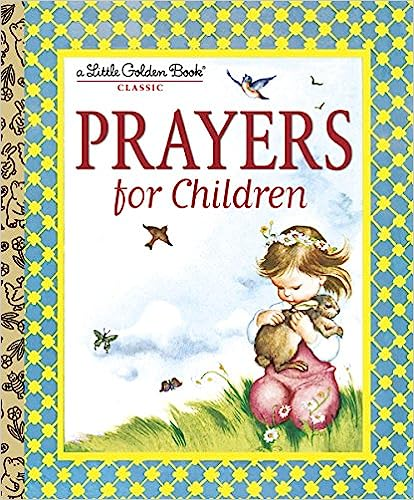
Book review: Prayers for Children

Prayers for Children (A Little Golden Book Classic)
Various authors
Illustrations by Eloise Wilkins
ISBN: 0307021068
ISBN-13: 9780307021069
UPC: 033500021060

This beautifully illustrated book was gifted to me at my baby shower. At first, I thought it was nothing more than a sweet little collection of prayers, but once I opened it up and began to turn the pages, those timeless watercolour illustrations flooded my mind with memories from my childhood. Suddenly, these 26 pages became nostalgia and something of an heirloom. Folks, this book has been rattling around bookstores (and now the internet) since it was first published in 1952… yes, over 70 years ago. And I think there’s a reason for it.

This book contains 19 prayers and poems, including the staple Our Father – it does have the doxology (i.e. “for the kingdom, the power and the glory…”) tacked on as the protestants usually pray it, but this isn’t a bad thing. There are other familiar prayers as well, such as the Evening Prayer (“now I lay me down to sleep…”). Some of the poetry was written by greats, like Ralph Waldo Emerson and Samuel Taylor Coleridge. The last page is dedicated to a musical arrangement of the evening prayer, so if you are a musically inclined family, you could even sing the prayer together!

Other than some of the thee/thou language that can simply be explained or changed to the modern version, it definitely stands the test of time. The many rhyming prayers will also help with memorisation, when the time comes for that.

We have the hardcover format, which is the classic format for Little Golden Book titles. It does not lay flat, but it is fairly light, and because of the nature of the book, you probably won’t be reading it from cover to cover in one sitting, so holding it isn’t too difficult. I can’t speak to the quality of the paperback or board books, though they are fairly scarce, so they may not be easily sourced, in any case.

In all, this is a good book of traditional style prayers. It is not strictly Catholic, but it has good material that can help little ones connect with God. The illustrations are what managed to stick in my memory for decades, and I still find them beautiful to behold. This is a good book for early prayers that has remained true to its claim of being a Little Golden Book Classic for several generations, and will likely continue for several more.

Do you have this book? Did you have it as a child? Have you bought this for your own child? Which prayers from this book stand out to you?

Until next time, let’s pray for each other. And remember, we can do Mom things through Christ who strengthens us!
Saint of the Month: St George

St George – martyr
Feast day: April 23
Patronage: knights, soldiers, scouts, fencers, archers

Many a fairy tale tells of dragons and princesses, most likely based on the legend of St George.

The real story goes like this:

Long, long, ago, in Selem, Libya, a frightening dragon lived in a lake. To keep this dragon at bay, the townsfolk would sacrifice their sheep to it, but later, they began to select children at random to sacrifice. One day, the king’s daughter was chosen, but while she was being led to the lake, St George killed the dragon, saving the princess, and freeing the city from the tyranny of the dragon forever!

Though our imaginings of fire-breathing dragons may not be accurate (it was probably more like a crocodile living in that lake), this tale echoes the victory of Christ over sin and death – in the battle of Good and Evil, Good always wins out in the end.

This is truly an inspiring story. But why?

Tales of courage and bravery openly appeal to our desire to help others. As Christians, we are called to be in relationship with others, and how we do that matters! It’s up to each of us to choose whether or not we want to help others reach their ultimate good: life with Jesus!

I think the story of St George can be used to teach little girls and boys of their duty to protect those who are weaker and more vulnerable than themselves and their capacity to play a role in bringing about the triumph of Good over Evil.

Until next time, let’s pray for each other. And remember, we can do Mom things through Christ who strengthens us!